
Amazon Explores Montgomery County for New Data Center Investment
A transformative technology project bringing jobs, investment, and long-term economic growth.
Investing in the Future
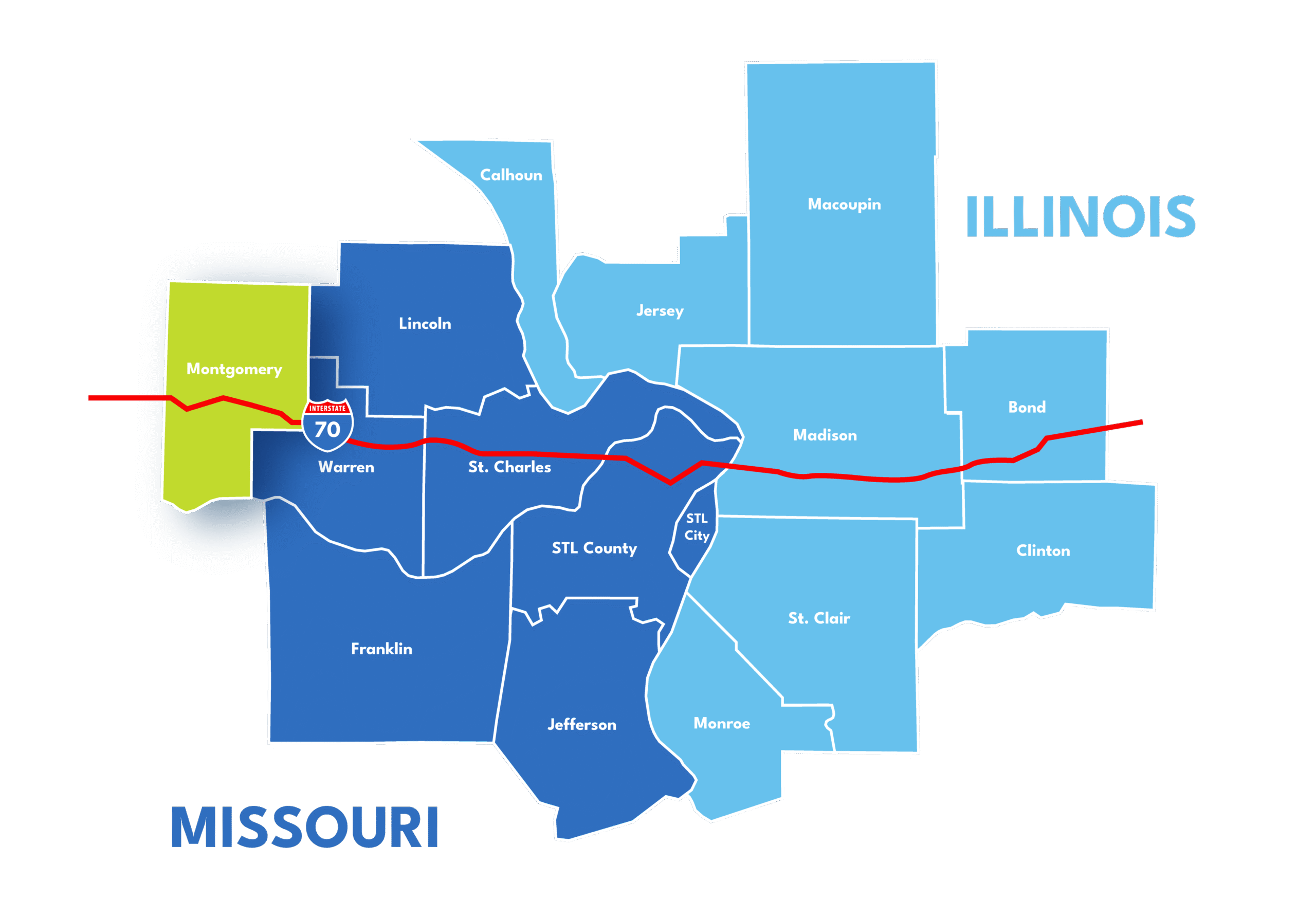
Montgomery County and Amazon are advancing plans for a next-generation data center campus that reflects our local character, supports responsible growth, and positions the region for long-term success. This partnership is driven by our talented workforce, strong infrastructure, and pro-business environment, and is expected to bring hundreds of new long-term technology jobs, thousands of construction jobs, expanded opportunities for local contractors and small businesses, and tens of millions in sustainable new tax revenue to support schools, public safety, community services, and overall quality of life.
What is a Data Center?
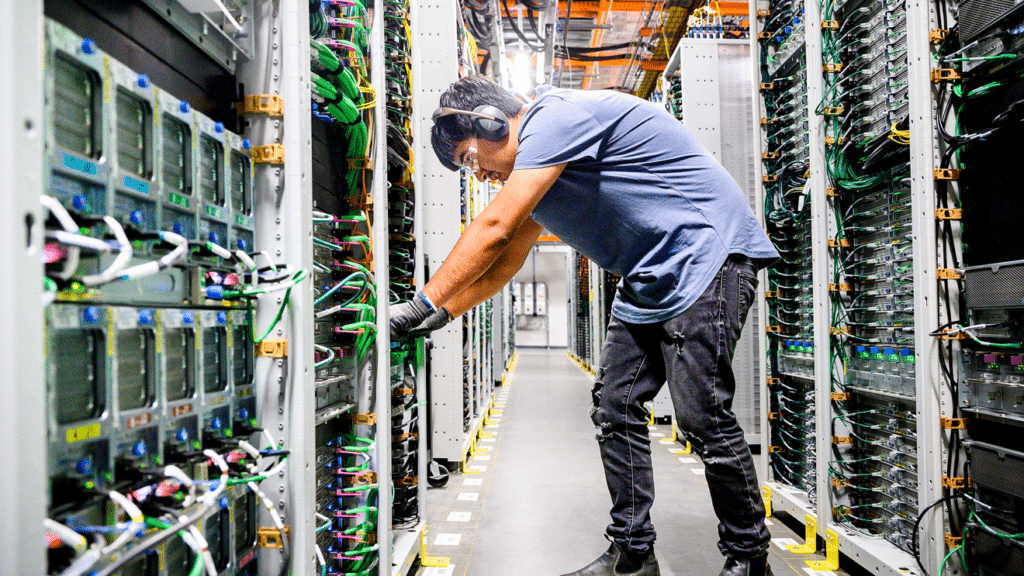
Our modern lives leverage numerous technological innovations to bring ease and accessibility to our day to day. Data centers are a key enabling component of this, providing technology services that build out these capabilities. Amazon’s data centers help serve millions of active customers: they keep your information safe and instantly available, powering everything from texts and streaming to school lessons, banking, and even hospital care to better help patients.

How does a family of 4 use a data center?
- Parents stream different Netflix shows while children play online games
- Smart home devices (thermostats, security cameras, baby monitors) connect to cloud servers
- School assignments submitted through learning management systems

How does a student use a data center?
- Accesses course materials and submit assignments through university platforms
- Orders food delivery through apps
- Uses social media platforms

How do empty nesters use a data center?
- Video calls with children and grandchildren
- Online banking and bill payments
- Medical portal access for healthcare records and appointments
Frequently Asked Questions
Data centers serve as the foundation for virtually everything that happens online, from sending emails to placing online orders, online banking, health records and so much more, making the internet as we know it possible. Beyond providing essential connectivity, data centers also contribute significantly to local communities through job creation, economic growth, and substantial tax revenue that help fund schools and social services.
This project would create hundreds of jobs and generate tens of millions of dollars in new tax revenue providing sustainable funding for essential services, local schools, and infrastructure. The economic effects will strengthen the local economy through job creation, increased business activity, and new opportunities for local contractors and service providers.
This project will create hundreds of full-time jobs and thousands throughout the construction phase.
We offer significant workforce development opportunities in communities where we invest, focusing on training people for jobs that build, power, connect, and operate data centers. We partner with community colleges and offer programs to prepare participants for careers in the data center supply chain. Additionally, we work with local schools where students can develop problem-solving skills and explore technology applications for real-world challenges.
Data centers use electricity to run computing devices, hardware, software, and networking equipment that power cloud computing services. We are committed to building and running our data centers in the most environmentally friendly way possible. Research by Accenture estimates that our infrastructure is up to 4.1 times more efficient than on-premises (or, a private data center that a company houses in their own facilities and maintains themselves). Accenture also found that when optimizing compute-heavy workloads on AWS, organizations can reduce their associated carbon footprint by up to 99%.
We work closely with utilities and grid operators to plan for future growth. Where we require specific infrastructure to meet our needs (such as new substations), we work to make sure that we’re covering those costs and that they aren’t being passed on to other ratepayers. We’re also working with utilities on innovative new agreements to keep rates comparably low and bring net-new carbon-free energy projects to the grid.
Regulations require that large industrial customers like data centers pay rates that fully cover the infrastructure and generation costs associated with usage.
In fact, in a recent national analysis study by the Lawrence Berkeley National Laboratory and The Brattle group, found that states with growing electricity demand—including from sectors like manufacturing and data centers—saw lower retail electricity prices. Adding new customers spreads fixed grid costs across more users, which helps reduce pressure on rates.
Independent national research from the Lawrence Berkeley National Laboratory and The Battle Group shows that the recent rise in electricity prices isn’t driven by data centers. The biggest statewide price jumps were linked to shrinking customer demand, legacy grid costs, extreme-weather recovery, wildfire mitigation, and natural gas price spikes—not new commercial load.
The utility plans for its demand and is subject to regulated capacity requirements. Midcontinental Independent System Operator (MISO)—the regional transmission organization—sets reliability standards and requires utilities to secure sufficient generation capacity plus a reserve margin to account for peak load events.
We work collaboratively with power providers to support responsible grid development that benefits all users while maintaining reliability and resilience across the system. Additionally, Missouri’s utility regulations establish separate rate classes to prevent residential customers from bearing the infrastructure costs associated with large industrial users, ensuring both reliability and fair cost allocation.
Our facilities are engineered to use as little water as possible. Many operate primarily using air cooling and only use water on the hottest days of the year. Based on the geography of this area, we anticipate this project to use natural air for cooling 93% of the year and will only use water for cooling 7% or less of the year. Learn more here: https://www.youtube.com/watch?v=78sMN1BZEJM
We design and operate our data centers to achieve industry-leading efficiency in both water and power usage. We measure this through two key metrics:
1. Power Usage Effectiveness (PUE) measures how much power goes to IT equipment versus other functions like cooling.
2. Water Usage Effectiveness (WUE) measures water used per unit of power. Lower numbers mean greater efficiency and fewer resources needed to support the same computing capacity.
We are a leader in the industry on both metrics, nearly 10% better than the average data center on PUE and more than 60% better on WUE.
Beyond this, we expect that our Missouri data centers will use water for cooling less than 7% of the year. The rest of the time, we simply cool our data centers with outside air. This is also industry leading as building closed loop waterless system would use 25%-35% more power during hot summer days when electrical grids may be constrained.
Our data center campus is designed with efficient water management in mind. To provide perspective on our usage, each building, on average, will use about 2.9 million gallons annually for cooling, which is comparable to a typical restaurant’s water consumption. At maximum buildout, the 17-building campus would require approximately 50 million gallons per year on average, similar to a typical golf course. This represents 0.03% of the aquifer’s average annual safe yield in this region, based on projected refill rates.
The water supply will be from deep on-site wells and will be drawing completely independently from the existing local water system, not impacting drinking water. Learn more here.
The water supply system will be completely independent of the local utility infrastructure. Water will be supplied from on-site wells and will be constructed in full compliance with all local and state regulations.
We plan to partner with Montgomery County farmers on irrigation efficiency programs. These conservation efforts will benefit all water users in the area and will make our presence a net water benefit for the local watershed.
To ensure our data centers operate as quietly as possible and do not negatively impact our neighbors. In addition to meeting all local noise regulations, we strive to design our facilities to federal guidance for the health and welfare of surrounding communities, which often are lower than the regulatory standards. We implement several noise mitigation measures including:
- Sound-dampening building materials and insulation
- Strategic placement of cooling equipment
- Visual screening where needed
- Generators utilize acoustical enclosures and mufflers
Throughout design and construction, we partner with acoustic engineers to keep noise levels low and ensure the facility fits comfortably within the surrounding community.
Yes. We include thoughtful sound and visual buffers as part of our design. This often includes landscaped berms, trees, and other screening features that help reduce noise and soften the visual presence of the facility, so it blends naturally with the surrounding area.
Backup generators are only run for short, scheduled tests required to ensure safety and reliability, typically just a few hours per year for each unit. These tests are strictly regulated, conducted during daytime hours, and must meet all local noise and permit requirements. This approach keeps the facility prepared for emergencies while keeping any potential disruption to a minimum.
We are committed to being a long-term community partner and work closely with local organizations, nonprofits, and community members to understand their needs. We maintain direct communication with local authorities and follow comprehensive Construction Management Plans.
Amazon data centers aren’t raising your electricity bills—Here’s the data
Research found that Amazon fully pays for its own electricity costs to power its data centers.
AWS Success Stories
From Around the Country
[masterslider id=”1″]
Workforce Development
The AWS Economic Development/Workforce Development Team offers programs designed to prepare individuals for in-demand careers in the growing data center and technology sectors. Key programs coming to Montgomery County include: